
How Does a Dentist Do a Root Canal? What You Should Know

Quick Answer
How does a dentist do a root canal?
The dentist enters the tooth, removes inflamed or infected soft tissue, and cleans the tiny canals extending through the roots. The prepared canals are sealed, and the tooth is restored, helping with saving your natural tooth when appropriate.
Key Takeaways
- Root canal care treats the interior of the tooth.
- Local anesthesia is commonly used during treatment.
- Unhealthy pulp tissue is removed.
- Specialized tools clean and prepare the canals.
- A material called gutta-percha is commonly placed inside them.
- A filling or crown may be used to restore the tooth.
When patients ask how a root canal works, the easiest way to understand it is to look at what happens beneath the tooth’s hard outer layers.
Inside is a soft center connected to narrow channels within the roots. Endodontic treatment addresses problems in this area. During this dental procedure, the dentist removes unhealthy tissue and seals the resulting spaces rather than removing the whole tooth.
What Does a Dentist Do During a Root Canal?
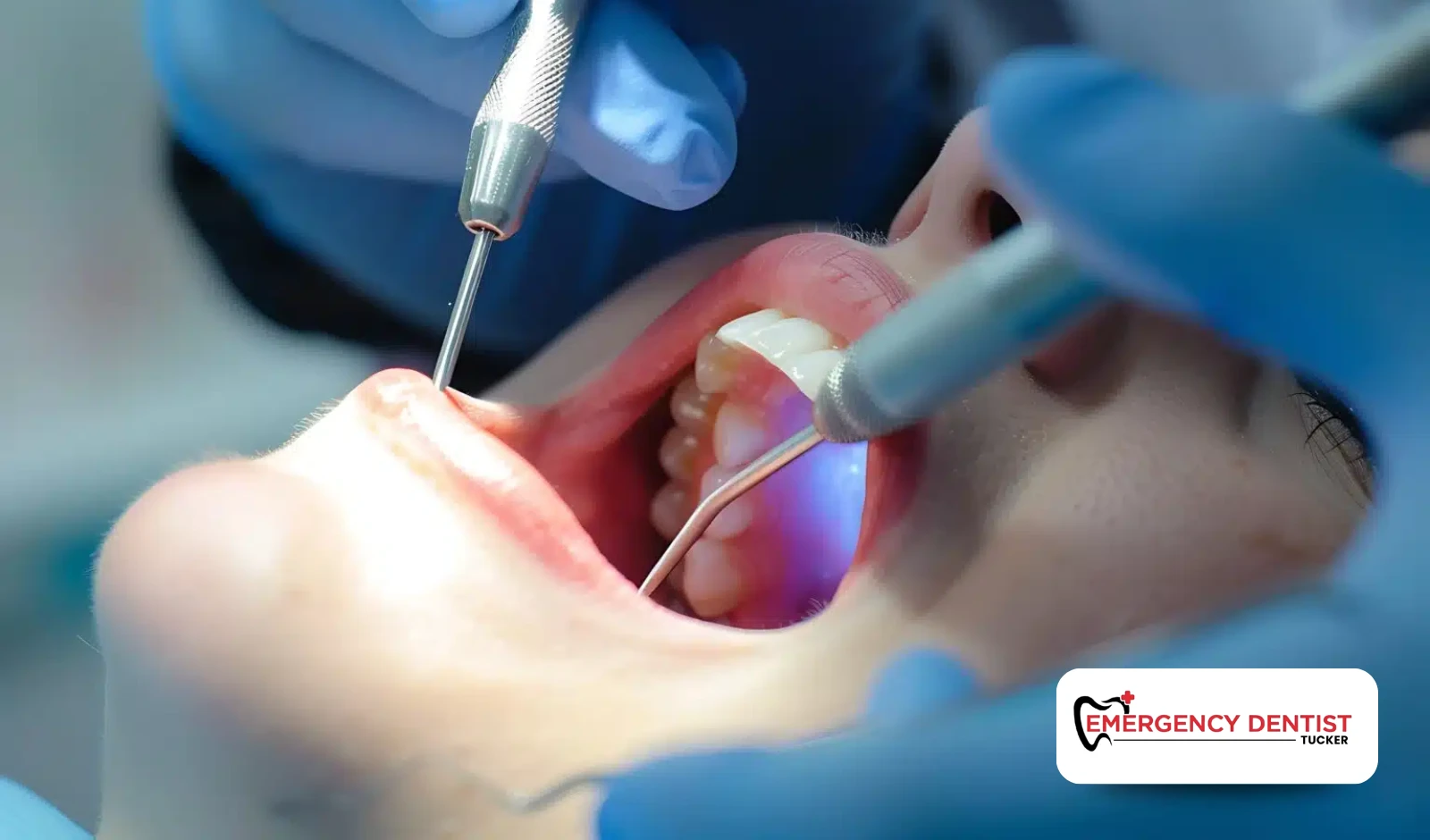
The dentist first examines the tooth and may use X-rays to better understand the root structure and surrounding area.
Keeping the Area Comfortable
Treatment generally begins with numbing the area using local anesthesia.
Once the anesthetic has taken effect, the dentist creates an access opening into the tooth.
Removing the Internal Tissue
The tooth’s pulp tissue includes nerves, blood vessels, and other soft structures.
When severely damaged or infected, the infected pulp is removed from the pulp chamber and root canals.
This tissue includes blood vessels and connective structures involved in tooth development. A mature permanent tooth can generally continue functioning without its pulp.
What Do Dentists Use to Clean Root Canals?
Once the unhealthy tissue is gone, the root canals are prepared.
For this part of the root canal procedure, the dentist uses fine instruments along with cleaning solutions. The dentist cleans and shapes the accessible canals before sealing them.
The internal structure varies between teeth, so the process is adapted to each case.
What Do Dentists Fill Root Canals With?
Patients often ask what dentists fill root canals with after the internal spaces have been cleaned and prepared.
A flexible dental filling material called gutta-percha is commonly used for this stage of treatment. It is carefully placed inside the prepared canals, usually together with a dental sealer that helps close small spaces around the material.
The gutta-percha and sealer remain within the roots of the treated tooth, creating an internal seal. Once the canals have been filled and sealed, the dentist can move on to restoring the opening made during treatment.
What Do Dentists Put in Root Canal Teeth After the Internal Work?

After the internal work is completed, the access opening created to reach the root canals also requires a restoration. Closing this opening helps protect the remaining tooth structure.
A temporary filling may be used between appointments, particularly when additional treatment or a final restoration is planned. Later, the dentist may recommend a permanent filling or dental crown to complete the restoration.
The final restoration is chosen according to the condition, position, and strength of the remaining tooth. The dentist may also consider how much biting or chewing pressure the tooth normally handles when deciding which option is appropriate.
Maintaining the Tooth After Treatment
Follow your dental team’s instructions while the tooth heals and until all restorative treatment has been completed. You may be advised to avoid chewing hard or sticky foods on the treated tooth, especially while a temporary restoration is in place.
Continue regular brushing and flossing afterward to keep the tooth and surrounding gums clean. Root canal treatment addresses an internal problem, while everyday dental care and regular dental examinations remain important for maintaining your overall oral health.
Final Thoughts
Root canal treatment removes unhealthy tissue from the tooth’s center and roots. The dentist then prepares, fills, and seals the canals before restoring the tooth.
If an infected tooth is a concern, a professional examination can determine whether root canal therapy is the appropriate treatment.
Get Straightforward Answers About Tooth Pain in Tucker
When a tooth keeps hurting, knowing the reason can help you make an informed decision about care. An Emergency Dentist in Tucker can evaluate the tooth, explain the findings, and discuss appropriate treatment options with you.
Frequently Asked Questions
Can I have a root canal if I already have a crown?
It may be possible, but the dentist needs to evaluate the crown and underlying tooth first. Treatment approaches differ depending on their condition.
Why are cleaning solutions used inside the tooth?
They help clean the internal root canal spaces while the dentist prepares them for filling and sealing.
What happens if I accidentally chew on a temporary filling?
A small amount of normal contact may not necessarily cause a problem, but avoid hard chewing as instructed. Contact your dentist if the restoration feels damaged or loose.
Can I wear my night guard after treatment?
Ask your dentist when to resume using it, especially if the tooth has received a new restoration that could affect its fit.
Can a root canal be repeated?
In some situations, a previously treated tooth may require additional endodontic care. An examination is needed to determine whether retreatment is appropriate.